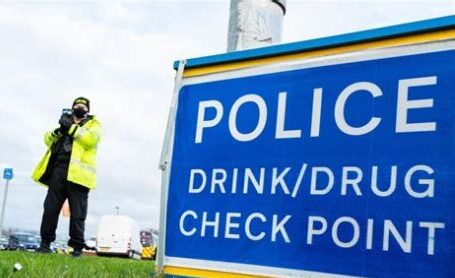
Knowing the exact legal alcohol limit for driving in the UK is a fundamental responsibility for every licence holder. Whilst the safest advice is not to drink any alcohol if you plan to drive, many motorists still ask what the precise legal limit is. The answer is not as simple as a single UK-wide figure. It varies depending on where you are in the country and can be measured in three different ways.
This guide provides a comprehensive breakdown of the blood alcohol limit, explains the regional differences, and outlines the serious legal and personal consequences of exceeding it. This information is accurate as of May 2026.
The UK Drink-Drive Limits: What the Law Says
In England, Wales, and Northern Ireland, the legal blood alcohol limit for driving is 80 milligrammes (mg) of alcohol per 100 millilitres (ml) of blood.
The police can test you using a breath, blood, or urine sample. For this reason, the law specifies three equivalent limits for the three countries:
| Test Type | Legal Limit in England, Wales & Northern Ireland |
|---|---|
| Blood | 80 milligrammes per 100 millilitres |
| Breath | 35 microgrammes per 100 millilitres |
| Urine | 107 milligrammes per 100 millilitres |
Although a blood test is not always conducted at the roadside, the blood alcohol limit is the key metric used in court and is what most people mean when they ask for the legal limit.
It is vital to understand that the 80mg limit is one of the highest in Europe. There is no exact number of units that can keep you safely under this limit, as your sex, weight, metabolism, what you’ve eaten, and your stress levels all affect how you process alcohol. The official advice is clear: if you’re driving, it’s safest to drink nothing at all.
A Divided Kingdom: How Scotland’s Limit Is Different
A crucial point for any UK driver, especially those living near or travelling across the border, is that Scotland has a significantly lower legal limit.
Scotland introduced a stricter law in 2014 and the limits are:
- Blood: 50 milligrammes per 100 millilitres
- Breath: 22 microgrammes per 100 millilitres
- Urine: 67 milligrammes per 100 millilitres
This means having even a single drink before driving in Scotland can put you over the legal limit. Crossing the border unknowingly with a small amount of alcohol in your system from England could result in a criminal charge. The UK Government has been in active discussion about potentially lowering the limit in England and Wales to match Scotland’s 50mg blood alcohol level, but no change has yet been implemented.
Consequences of Exceeding the Legal Limit
Drink-driving is treated as a serious criminal offence. If you are caught driving, or attempting to drive, while over the prescribed limit, you will face a mandatory court appearance and immediate consequences.
On-the-Spot and Court Penalties
The penalties are severe even for a first-time offence and become much harsher for repeat offenders.
- Driving Ban (Disqualification): A minimum 12-month ban for a first offence. If you are convicted a second time within 10 years, the minimum ban increases to 3 years.
- Unlimited Fine: The court may impose any financial penalty it deems appropriate. This is often a Band C fine, which is 125–175% of your relevant weekly income.
- Prison Sentence: You may face up to 6 months in prison.
- Criminal Record: A conviction results in a criminal record.
The only potential way to reduce the length of the driving ban is by completing a court-approved Drink-Drive Rehabilitation Scheme (DDRS) course, which can cut the disqualification period by up to 25%.
Long-Term Hidden Consequences
Beyond the immediate courtroom penalties, a conviction has a profound ripple effect on your life:
- Duration of Criminal Record: The offence will remain on your DVLA driving record for 11 years from the date of conviction. It will appear on your licence as a DR10 endorsement and will be visible to insurers for the entire period.
- Sky-High Insurance Costs: Once your driving ban has ended, you will be considered a high-risk driver. Insurance premiums can rise dramatically, with some mainstream insurers refusing to cover you at all. The Institute of Advanced Motorists has estimated that the total long-term cost of a conviction can be between £20,000 and £50,000 once lost travel, higher insurance costs and legal fees are taken into account.
- Travel Restrictions: A criminal record for drink-driving can make it difficult or impossible to enter certain countries. Countries with strict entry requirements, notably the USA, Canada, and Australia, may deny you entry, disrupting any plans for holidays, business travel, or study.
- Employment Difficulties: Many jobs that require a clean driving record, security clearance, or professional integrity will be directly affected. You must declare unspent convictions to employers, and the record will appear on a Disclosure and Barring Service (DBS) check for certain roles for years to come.
Challenging Myths About Drink-Driving
There are two persistent myths that often lead to people being caught over the legal limit.
Myth 1: “I can work out exactly how much I can drink.”
This is dangerous and untrue. The official advice from Police.uk is that you cannot convert the legal breath or blood alcohol limit into a specific number of units. The only safe advice is not to drink at all if you’re driving, or to arrange alternative transport such as a taxi.
Myth 2: “I’m fine to drive the next morning.”
This is one of the most common reasons people are prosecuted. Alcohol stays in your system much longer than you feel its effects. Depending on how much you drank the night before, you can easily still be over the limit at breakfast time or even into the next afternoon. The “morning after” is a major trap for drivers.
Conclusion
The legal blood alcohol limit for driving in England, Wales, and Northern Ireland is 80mg per 100ml of blood. In Scotland, it is a stricter 50mg. Exceeding this limit is a serious criminal offence with an automatic 12-month driving ban, an unlimited fine, a criminal record lasting up to 11 years, and profound knock-on effects on your employment and ability to travel.
The only way to guarantee you are under the limit and safe to drive is to completely separate the act of drinking from the act of driving. If you are in any doubt whatsoever, do not get behind the wheel.
Read more on our blog about how to avoid points on your driving record, and check out tips on how to pass your driving test in the UK with ease. Stay up to date with the latest news on UK driving licences on our website. hope this article “Driving Licence UK: the Legal Limit of Blood Alcohol ” answers your questions on drink and drive in the UK? if yes , stay connected to our blog .