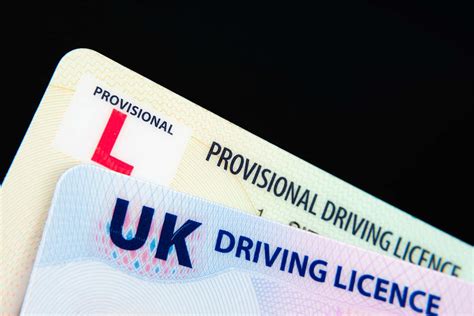
In the United Kingdom, your driving licence is more than just a plastic card; it is a financial asset and a legal necessity. For new drivers, accumulating just 6 points within the first two years leads to an automatic revocation. For experienced drivers, 12 points within three years usually means a trip to court and a disqualification (toting up).
But the pain doesn’t stop there. Points on your licence increase your insurance premiums for five years, potentially costing you thousands of pounds.
The best strategy? Avoid them entirely. You don’t need to drive like a saint; you just need to drive smart. Here are 10 expert, actionable tips to ensure your licence remains point-free.
1. Master the Art of Speed Awareness (Not Just Limit Awareness)
Most points come from speeding. However, many drivers confuse “keeping up with traffic” with legality.
- The 10% + 2 Myth: While many police forces adhere to a guideline of not prosecuting below 10% over the limit + 2 mph (e.g., 35mph in a 30mph zone), this is a concession, not a right. To be safe, set your cruise control to the exact limit.
- Variable Speed Zones: Smart motorways (M25, M6, M62) use average speed checks. Do not speed up between cameras. Maintain a steady, legal speed.
- Pro Tip: If you see a 20mph zone, treat it like a school zone—even at 3 AM. 20mph zones are the most heavily enforced areas in the UK.
2. The “Mobile Phone Jail” (Zero Tolerance)
Using a hand-held phone while driving carries 6 penalty points (double a standard speeding ticket) and a £200 fine. For new drivers, this is an instant ban.
- The Solution: Buy a magnetic phone mount and place it in the glove box or centre console. Do not touch it.
- The Loophole that isn’t a loophole: You cannot use your phone to take photos or videos, scroll playlists, or use maps while holding it. Program your sat-nav before you turn the engine on.
3. Understand Traffic Light “Creep”
Running a red light (including Amber) carries 3 points. The most common reason for this is not aggressive driving, but hesitation.
- The Amber Rule: An amber light means “Stop” unless you are so close to the line that stopping would cause an accident.
- The Creep: If you are waiting at a red and it turns green, do not rush. Many cameras catch drivers who “jump the gun” before the red light has fully switched off.
4. The “Second Hand” Rule for Roundabouts
A staggering number of points are issued for “Driving without due care and attention” (3-9 points) at roundabouts.
- Indicators: Forgetting to signal left when exiting a roundabout confuses other drivers and constitutes a fault.
- Lane Discipline: If you enter the wrong lane (e.g., turning right from the left lane), you must go the wrong way. Do not swerve across the roundabout. A momentary lapse here can cause a collision and automatic points.
5. Beat the Average Speed Camera Logic
Average speed check zones (common on motorway roadworks) are the easiest places to get points because drivers get bored.
- How they work: Camera A takes a photo of your plate. Camera B takes a photo. The computer calculates the time elapsed.
- The Trap: Speeding up between cameras to overtake a lorry, then slowing down for the next camera, does not work. Your average speed is calculated over the entire distance.
- Strategy: Set your cruise control to 50mph (or the signed limit) the second you pass the first “Average check” sign.
6. The “Puffin Crossing” Pedestrian Trap
Pedestrian crossings (Zebra, Pelican, Puffin) are point factories. If a pedestrian steps onto the road, you must stop.
- The Close Call: If you drive through a crossing when someone is waiting on the pavement (not yet on the road) at a Zebra crossing, you are technically fine, but it’s a grey area.
- The Rule: Stop for any pedestrian showing intent to cross. If a police officer sees you force a pedestrian to wait, you can be charged with “Driving without reasonable consideration” (3 points).
7. Dashcam Defensive Driving (The Counter-Attack)
You can get points even if you don’t crash. “Road rage” gestures, tailgating, or brake-checking can be reported.
- The Risk: The public can now submit dashcam footage directly to police forces via Op Snap (National Dashcam Safety Portal).
- The Defense: Drive as if a camera is always pointed at your face. Because now, it likely is. Keep a 2-second gap (4 seconds in rain).
8. The Motorway Lane Discipline Rule
Middle-lane hogging is now enforceable with 3 points and a £100 fine (up to £1,000 in court).
- The Rule: Keep left unless overtaking. If you sit in lane 2 when lane 1 is empty, you are breaking the law.
- Why it helps: Good lane discipline reduces the urge to undertake (illegal) and reduces your risk of a “Careless Driving” charge.
9. The “Morning After” Alcohol Calculation
You can be arrested for drink driving the morning after a heavy night, even if you feel sober.
- The Science: Your liver processes alcohol at roughly 1 unit per hour. A bottle of wine (10 units) takes 10 hours to clear.
- The Zero Strategy: If you are driving before 10 AM, do not drink alcohol at all the night before. A “sleep” does not lower your Blood Alcohol Concentration (BAC). A “morning after” ban carries the same 12+ points as a night out ban.
10. Vehicle Maintenance (The Silent Offence)
You don’t have to be moving to get points. A defective vehicle can land you with 3 points (e.g., driving with a tyre below 1.6mm tread depth).
- The Weekly Check: Check your tyres (tread and pressure), lights, and windscreen washer fluid every Sunday.
- The Bulb: If a lightbulb goes out, you are committing an offence the second you drive onto a public road. Carry spares or use a pre-drive walkaround.
The “Safety Course” Escape Hatch
If you are caught speeding (usually up to 10% + 9mph over the limit, e.g., 42 in a 30), you may be offered a Speed Awareness Course.
- Cost: ~£85 (More than the fine, but cheaper than insurance hikes).
- Benefit: You pay for the course, but you receive 0 points on your licence.
- Warning: You can only take this course once every 3 years. If you get caught again, the points go on.
Frequently Asked Questions (FAQs)
1. How long do penalty points stay on my UK driving licence?
Penalty points remain on your driving licence for 4 years from the date of the offence (not the conviction date). However, they are only active for 3 years for “toting up” purposes (the 12-point disqualification rule). Insurance companies usually ask about points for the last 5 years, so you must declare them even after they expire on paper.
2. Can I remove points from my licence early?
No. You cannot remove points early for good behaviour. The only way to have zero points is to never commit an offence, or to successfully complete a Speed Awareness Course (which avoids points entirely). Once points are endorsed on your licence, they must expire naturally.
3. What happens if I get 6 points in my first 2 years of driving?
Under the New Drivers Act 1995, if you accumulate 6 or more points within 2 years of passing your first test, the DVLA will revoke your licence. You must reapply for a provisional licence, retake your theory test, and retake your practical driving test. There is no appeal process.
4. Do I have to tell my insurance company about penalty points immediately?
Yes. Your insurance policy is a contract of utmost good faith. You must inform your insurer as soon as you receive the penalty notice (FPN) or conviction. Failing to do so can void your insurance, leaving you uninsured and facing 6-8 points for driving without valid insurance.
5. Can I get points on my licence if I wasn’t driving the car?
Yes, in two scenarios:
- Failure to identify the driver: If you don’t tell the police who was driving (e.g., a family member), you can receive 6 points for the offence of failing to provide driver details.
- Owner liability: For certain offenses (like bus lane or red light cameras), the registered keeper can be fined/pointed if they cannot prove someone else was driving.
6. Is it worth contesting a speeding ticket in court?
Rarely. If you plead guilty, the standard fine is usually £100 and 3 points. If you plead not guilty and lose in magistrates’ court, the fine rises to 150% of your weekly income and you pay court costs (often £600+). Only contest if you have irrefutable evidence (e.g., faulty camera calibration, mistaken identity) and legal advice.
7. Can I take a Speed Awareness Course more than once?
Yes, but only once every 3 years for the same offence type (e.g., speeding). If you get caught speeding again within 3 years of completing a course, you will receive points and a fine. The National Driver Offender Retraining Scheme (NDORS) keeps a central record.
8. Do penalty points affect my job?
Yes, for many professions:
- HGV/PCV drivers: Even 3 points can make you unemployable.
- Company car drivers: Your employer will likely revoke your driving privileges at 6 points.
- Emergency services (police, ambulance): Usually a zero-tolerance policy (3 points = disciplinary review).
- Any role requiring a licence check: Insurance for fleet vehicles often excludes drivers with 6+ points.
9. Do penalty points transfer between Northern Ireland and Great Britain?
Yes. The UK National Driver Register links the DVLA (Great Britain) and DVA (Northern Ireland). Points accrued in Manchester apply in Belfast and vice versa. However, the Republic of Ireland does not automatically share points with the UK (though fines may still be pursued).
10. What is the difference between a Fixed Penalty Notice (FPN) and a court summons?
- FPN: Minor offenses (speeding up to 10% + 9mph over). You pay £100 and accept 3 points. No court appearance.
- Court summons: Serious speeding (e.g., 50mph in a 30mph zone), careless driving, or already having 9+ points. You must attend court. Magistrates can impose higher fines, 6-9 points, or a disqualification.
11. Can a passenger’s behaviour give me penalty points?
Yes, indirectly. If a passenger distracts you (e.g., shouting, handing you a phone) and you subsequently drive without due care (e.g., swerve, run a light), you are still responsible for the vehicle. The passenger cannot take the points for you. You must pull over safely before engaging with passengers.
12. What happens if I reach 12 points but need my licence for work?
You can argue “Exceptional Hardship” (England/Wales) or “Special Reasons” (Scotland) in court. If successful, the magistrate may reduce the disqualification or impose more points instead of a ban. However, this rarely works for purely financial inconvenience (“I need my car to get to work”) and requires a solicitor.
Final Verdict: Keep Your Licence Clean
Having a clean licence is the single best way to keep your insurance costs down and your freedom intact. The police are not looking for criminals; they are looking for distracted, rushed, or lazy drivers.
The Golden Rule: Drive predictably, not politely. If you focus on anticipation rather than speed, you will never see a penalty notice in the mail.
Check out our blog to see tips on how to remove penalty points on your UK driving licence and also tips on how to upgrade your driving LICENCE category in the UK.